You cleared the six-week appointment. You got the green light. And now you are standing in front of your mat, ready to get back to feeling like yourself. And something still feels off.
Your core feels absent. Unreliable. Like it is there but not quite listening. You brace through lifts, hold your breath through effort, and wonder why every exercise tutorial you try leaves you leaking, aching, or more disconnected than before.
Here is what no one explains at that appointment: the core is not just a set of muscles to strengthen. It is a system that involves your breath, your posture, your nervous system, and even the way you have learned to hold tension since birth. And healing it requires understanding all of those pieces, not just doing more reps.
What Your Core Actually Is
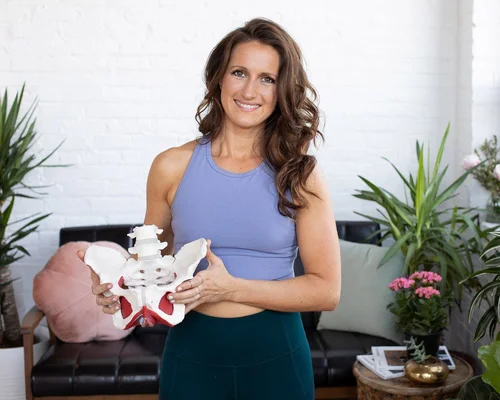
Most people think of the core as the front of the abdomen, the muscles that show up in fitness ads and six-week “bounce back” programs. But the core is really a pressure chamber. It is made up of four structures that have to work together:
- The diaphragm at the top, which drives your breathing
- The deep abdominal wall wrapping around the front and sides
- The multifidus muscles running along the spine at the back
- The pelvic floor at the base, supporting your organs and managing downward load
When you breathe, all four of these structures move in coordination. When you lift your baby, cough, or stand up from the floor, pressure rises through this system. A healthy core manages that pressure efficiently. An uncoordinated one does not – and the result can show up as leaking, heaviness, or a feeling that your core just is not doing its job.
The key thing to understand is that this is usually a timing and coordination problem, not a strength problem. Your pelvic floor may not be activating at the right moment — like just before a cough or a lift — rather than being globally weak. That difference matters, because it changes how you train.
After pregnancy and birth, this coordination is disrupted. Not because your core is broken. Because it has been through an enormous mechanical change and needs to be retrained, not just strengthened.
Why Breath Is the Foundation of Core Recovery
The single most overlooked piece of postpartum core rehabilitation is breathing.
During pregnancy, your growing baby pushes your diaphragm upward and changes how your ribcage moves. Your body adapts to make room, often relying more on upper chest breathing and less on full ribcage expansion. While this is a normal pregnancy adaptation, many women continue breathing this way long after delivery without realizing it.
Why does that matter? Because your diaphragm and pelvic floor are designed to work together. When you inhale well, the diaphragm lowers and the pelvic floor gently lengthens with it. When you exhale, both naturally recoil upward. This coordinated movement is a key part of how your core manages pressure and supports your body during movement.
If your breathing mechanics remain altered after birth, that coordination often does too. The diaphragm may not move through its full range, the pelvic floor may not respond as it should, and the core system can begin to feel weak, disconnected, or poorly supported.
This is why breath retraining comes before any other exercise in structured postpartum recovery. It is not just a warm-up—it is the foundation for rebuilding how your core and pelvic floor function together.
How Posture After Birth Affects Your Core and Pelvic Floor
Postpartum posture changes are almost universal. Most women do not notice them because they develop gradually during pregnancy and carry into the postpartum period without much awareness.
Common postpartum posture patterns include:
- Rib flare: the lower ribs staying elevated and flared outward, even at rest
- Anterior pelvic tilt: the pelvis tipped forward, increasing the arch of the lower back
- Forward head position from looking down during feeding and carrying
- Rounded shoulders from sustained arm-forward positions with a newborn
Each of these changes affects how pressure moves through the core. When the ribcage stays lifted and the pelvis tilts forward, the diaphragm and pelvic floor are no longer stacked in the alignment they need to function together. Pressure during lifting, coughing, or exercise moves downward instead of being managed throughout the system.
This is why pelvic floor symptoms such as leaking, heaviness, and pressure often increase with certain movements and not others. Movement is not always the problem. The position the movement is happening in may be the problem.
It is important to be transparent here: the direct link between specific posture corrections and pelvic floor symptom improvement has strong clinical reasoning behind it, but the research directly testing this connection is still emerging. What we do know from biomechanics is that the alignment of the ribcage over the pelvis affects how the pressure system functions. Clinical experience consistently supports this, and the approach is widely used in pelvic floor rehabilitation — but more studies are needed to confirm exactly how much posture correction alone contributes to symptom improvement.
That said, restoring rib-to-pelvis alignment is one of the most practical starting points for improving how your core manages pressure. It does not require more exercises. It requires better positioning during the exercises you are already doing.
The Nervous System Piece That Most Programs Skip
Your body heals in safety. This is not a metaphor. It is physiology.
When the nervous system is in a heightened state, muscle tension increases across the whole body, including the pelvic floor. Chronic tension in the pelvic floor can contribute to symptoms that look like weakness, including leaking, urgency, and discomfort, but are actually the result of a pelvic floor that is too tight, too guarded, and unable to lengthen and coordinate properly.
Research supports this connection. A study of women with pelvic floor disorders found that a history of depression tripled the odds of developing pelvic floor hypertonicity. Pain after childbirth and insufficient pain management were also significantly associated with worse pelvic floor function years later. And women with urinary incontinence who also had pelvic floor muscle tenderness had higher anxiety and stress scores than those without tenderness.
One important thing to know: many postpartum women do not have purely tight or purely weak pelvic floors. Many have a combination of both — some muscles that are overactive and others that are undercoordinated. This is why a cookie-cutter approach does not work. The pelvic floor needs to be assessed individually to understand what is actually happening.
New motherhood is one of the most neurologically demanding periods of a woman’s life. Sleep deprivation, feeding demands, hormonal shifts, and the emotional weight of a changed identity all register in the nervous system as sustained low-grade stress. The body adapts by staying alert, staying tense, staying ready.
A postpartum core program that skips this piece will often plateau. You can strengthen muscles, but if they cannot let go under load, they cannot function the way they need to. Nervous system regulation — including breath, movement, rest, and sometimes professional support — is part of recovery, not separate from it.
This is not about meditation replacing rehabilitation. It is about understanding that how your nervous system feels on any given day affects how your core responds on that same day. The two are not separate.
The Mindset Shift That Makes Everything Else Work
One of the most consistent patterns in postpartum recovery is this: women who approach healing as something to push through tend to stall. Women who approach it as something to listen through tend to progress.
This is not about effort. Most postpartum women are working extremely hard. The problem is direction. Pushing harder through symptoms, including leaking more, feeling more pressure, and experiencing more pain, rarely leads to improvement. It usually leads to compensation. The body finds a way around the problem, and that workaround becomes the new pattern.
Symptoms are communication. Leaking during a squat means the load exceeded what your system could manage at that moment. Heaviness after a walk means the cumulative load was more than your pelvic floor could sustain. These are not signs to stop forever. They are signals to reduce load temporarily, rebuild capacity, and progress more gradually.
The shift is from “why won’t my body do this” to “what is my body telling me it needs.” That reframe changes how you train, how you rest, and how quickly you actually progress.
What a Structured Core Recovery Progression Actually Looks Like
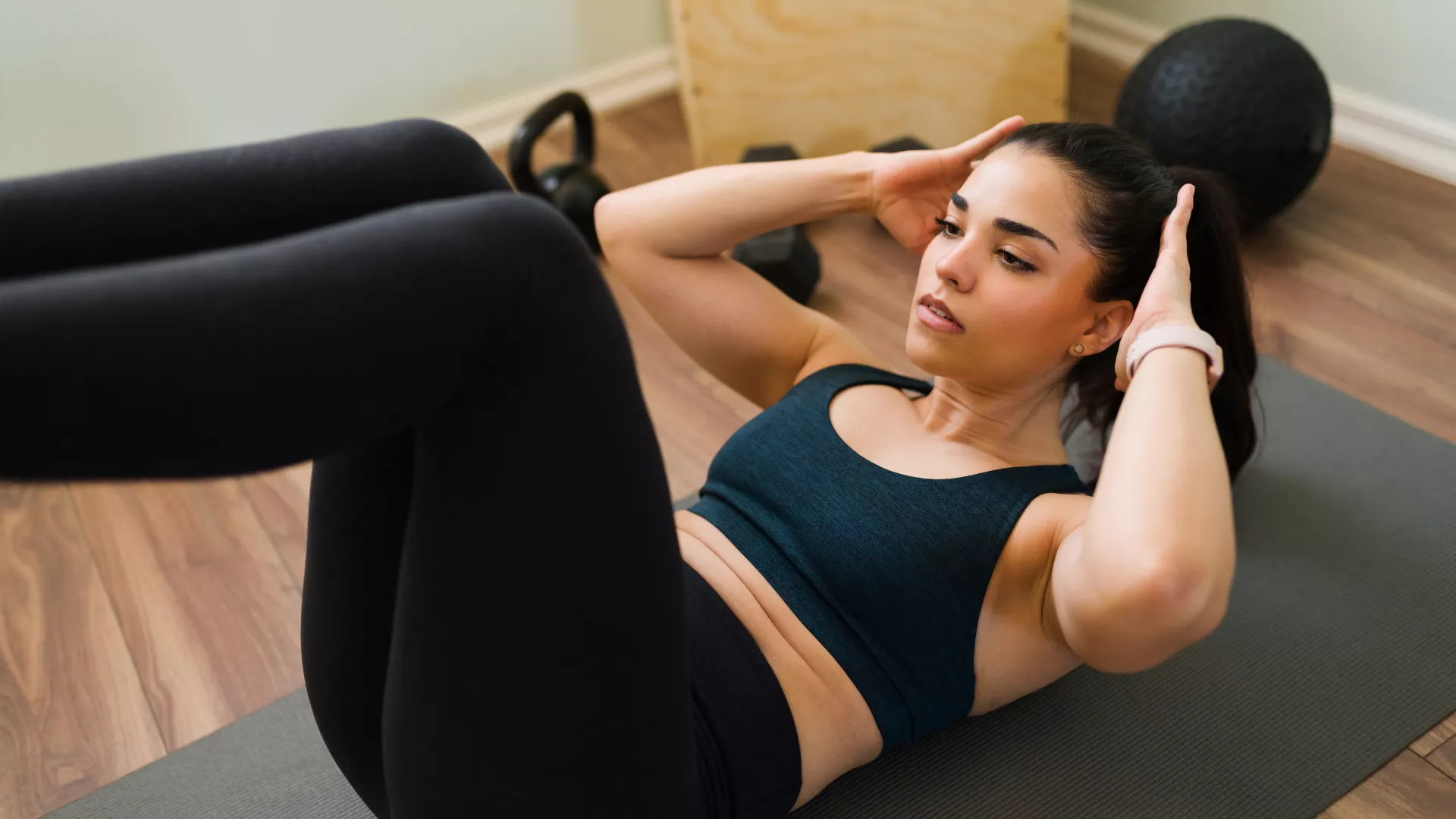
Effective postpartum core recovery does not start with planks or bird-dogs or any loaded movement. It follows a sequence that mirrors how the system needs to rebuild.
1. Breath mechanics first.
Restoring diaphragmatic breathing, rib mobility, and the natural coordination between the diaphragm and pelvic floor. This happens in supported, low-load positions. It is the foundation for everything else.
2. Pressure management second.
Learning how to manage intra-abdominal pressure during effort: coordinating the exhale with exertion, stacking the ribcage over the pelvis, and training the pelvic floor to respond appropriately under load before that load increases.
3. Stability and endurance third.
Building the ability to maintain coordination and position over time and across different movements. This is where posture work, positional training, and foundational strengthening come in.
4. Strength and load fourth.
Progressive resistance training that challenges the system in a controlled, graduated way. This phase prepares the body for real-life demands such as picking up a growing toddler, returning to running, and lifting in the gym.
5. Impact and high-load movements last.
Running, jumping, heavy lifting, and high-intensity exercise. These are not off-limits. They are the goal. But they belong at the end of a progression, not the beginning.
Most programs skip to step four or five. This is why so many women feel stuck, not because they are not working hard enough, but because the foundation was never built.
What You Can Expect When the Foundation Is Built Correctly
When breath, posture, and nervous system regulation are addressed alongside strength, the results look different from a traditional fitness program.
Women who complete this kind of recovery describe:
- Lifting their child without bracing or leaking
- Exercising without the pelvic pressure that used to stop them
- Sneezing, coughing, and laughing without the anxious pre-clench
- Moving through their day with less low back tension and more stability
- Feeling like they inhabit their body again, rather than managing it
This is not aspirational. It is what appropriately sequenced, whole-system postpartum recovery produces.
Your core was not broken by pregnancy and birth. It was changed. And change, given the right support, is something a body knows how to work with.
Ready for a Step-by-Step Postpartum Core Recovery Plan?
If you want a structured program that addresses breath, posture, and progressive core rehabilitation from day one, B Recovered was designed with exactly this in mind.
Whether you are newly postpartum or months out and still feeling stuck, the program guides you through each phase of recovery with clinical precision and a real understanding of what your body needs.