You scrolled through another workout video, the kind that promises a flat stomach in ten minutes, and something in you tightened. Not your core. Your jaw. Because somewhere underneath the urge to push play, you already know: this is not what your body needs right now.
Maybe you tried the crunches and felt that familiar dome push up through your midline. Maybe you ran for the first time since birth and ended the morning with leaking, pressure, or a quiet ache you could not place. Maybe you have done all the exercises and your core still does not feel like yours.
Postpartum core recovery is not a fitness problem. It is a rehabilitation process. And the difference between the two is the difference between progress that lasts and frustration that compounds.
Aesthetic Core Workouts vs. Core Rehabilitation
Most of the core content available online is built for one outcome: how the abdomen looks. Crunches, sit-ups, weighted twists, planks held to failure. These exercises produce visible muscle definition. They do not necessarily produce a core that functions well.
A core that functions well does something different. It manages pressure during effort. It supports your spine during lifting. It coordinates with your breath. It allows you to sneeze without leaking, to bend without bracing, to chase your child across the yard without something giving way.
Aesthetic workouts target the surface. Rehabilitation rebuilds the system. Both can have a place in fitness, but the order matters. Trying to sculpt a core that has not yet been restored creates exactly the symptoms most postpartum women are trying to resolve.
If your goal is to feel strong, supported, and capable in your body again, the rebuilding work has to come first.
What Is Actually Happening Inside Your Core After Birth
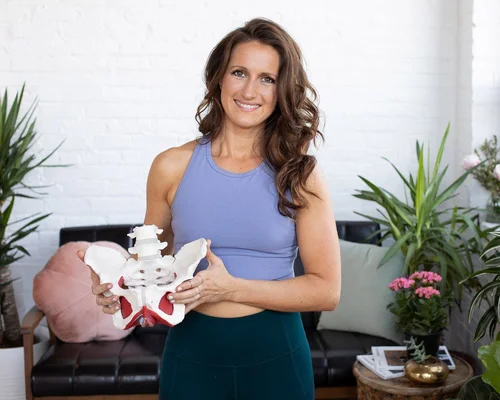
Pregnancy reshapes the core. Not as a failure, but as an adaptation. As your uterus grows, your linea alba (the connective tissue down the center of your abdomen) stretches and thins to accommodate it. Your ribcage flares outward. Your pelvis tilts forward to support your shifting center of gravity. Your diaphragm rides higher in the chest. Your pelvic floor manages a constantly increasing downward load.
After birth, these structures do not snap back into a previous shape. They begin a long, gradual process of remodeling. Connective tissue restores its density slowly. The pelvic floor needs to relearn coordination. The diaphragm needs to drop fully into the abdomen again. The deep core muscles need to relearn how to fire in sync.
None of this happens automatically. None of it is solved by simply waiting. And none of it responds well to being skipped over in favor of harder workouts.
Your core is a pressure-management system. After pregnancy, that system needs to be retrained from the foundation up.
Here Is How to Rebuild Without Setting Yourself Back
1. Start With Breath, Not Exercises.
Breath is the foundation of core coordination. When you inhale through the diaphragm, your pelvic floor gently lengthens. When you exhale, both recoil and engage together. This coordinated pattern is what allows your core to manage pressure under load. If breath mechanics are off, every exercise that follows will be working against a broken pattern. Begin with five to ten minutes a day of diaphragmatic breathing. Lying down. Hands on the lower ribs. Feel the ribs expand outward, not the shoulders rise. This is not a warm-up. It is the first phase of the work.
2. Restore Coordination Before You Add Strength.
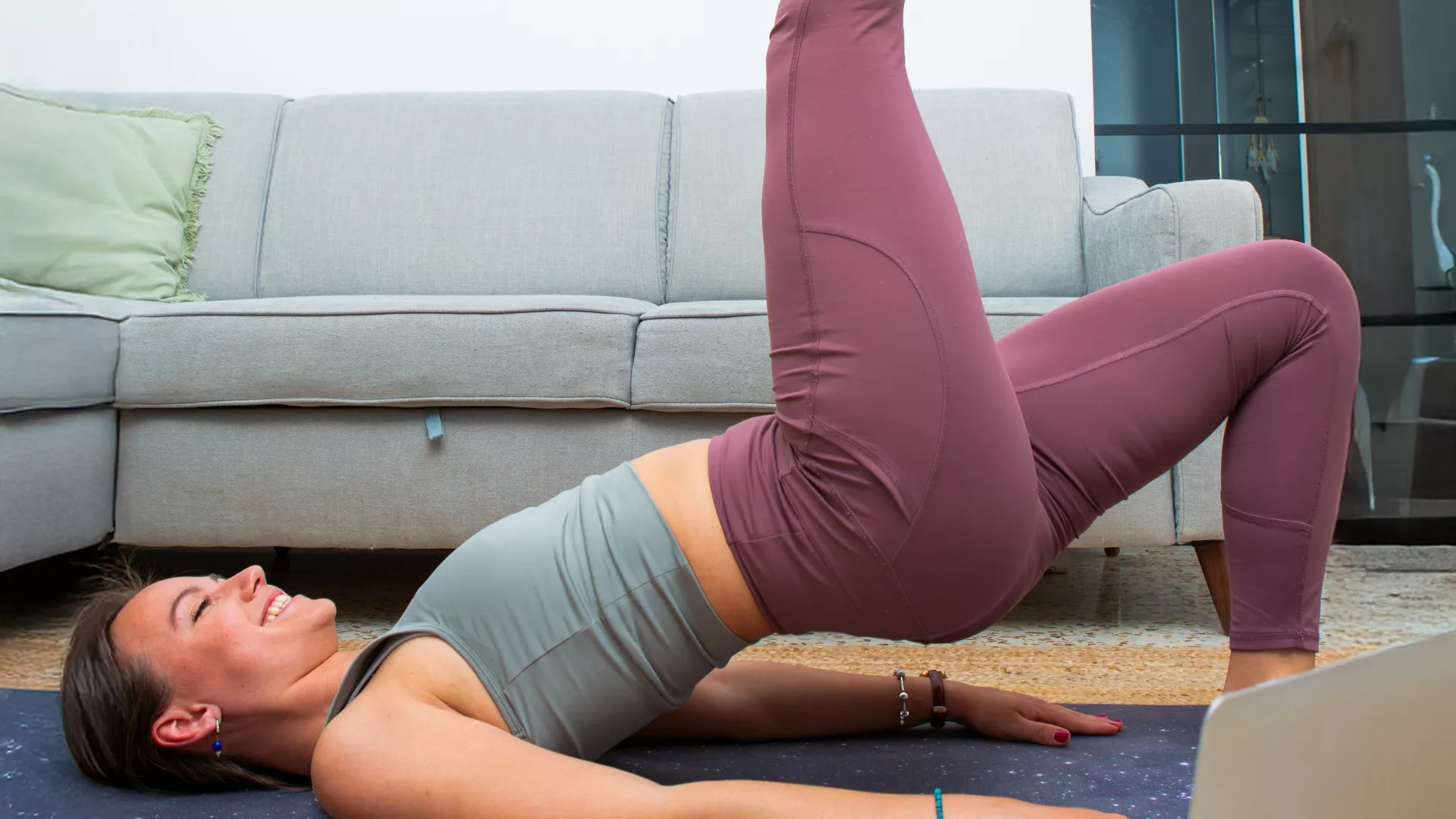
After breathing, the next layer is coordination. Your deep core (transverse abdominis, pelvic floor, multifidus, and diaphragm) needs to relearn how to fire together. This often looks slow and unimpressive from the outside. Gentle exhale-on-effort work. Connecting breath to small movements like lifting one leg from a hooklying position. Heel slides. Pelvic tilts coordinated with breath. These are not warm-ups for the real work. This is the real work. Skipping this layer is the single most common reason women plateau in their recovery.
3. Reintroduce Strength in a Sequenced Way.
Once breath and coordination are in place, progressive strength becomes both safe and effective. Begin with low-load functional movements that mirror daily life: squats, hinges, carries, and step-ups. Pay attention to whether you can maintain breath mechanics and rib-to-pelvis alignment under load. If you cannot, the load is too high, regardless of how light it feels. Add weight gradually. Watch how your body responds in the hours and day after, not just during the workout. Symptoms that show up later are still feedback worth listening to.
4. Reintroduce Impact Carefully and Late.
Running, jumping, and high-intensity work belong at the end of a progression, not the beginning. Impact load asks your pelvic floor to absorb downward force several times per second. If pressure management is not yet established, that load will overwhelm the system and produce exactly the symptoms (leaking, heaviness, pelvic floor fatigue) that most women are trying to leave behind. There is no benefit to rushing this step. The runners and athletes who return to their sport without persistent symptoms are the ones who built the foundation first.
5. Treat Symptoms as Information, Not Failure.
When leaking, pressure, or core fatigue shows up during or after exercise, it is not a sign that your body has failed. It is a signal that the load exceeded your current capacity. The right response is not to push through. It is to pull back, rebuild from a lower threshold, and approach that same load again later. This is how capacity actually builds. Pushing through creates compensation. Pulling back and rebuilding creates progress.
What Most Postpartum Core Programs Get Wrong
There is no shortage of postpartum core content. The problem is that most of it skips directly to strengthening exercises without ever rebuilding the foundation. Crunches before breath. Planks before coordination. Bird-dogs before pressure management. The exercises are not inherently bad. The order and the timing are.
Other common gaps in postpartum core programs:
- No assessment of where the woman actually is in her recovery, so every participant gets the same program regardless of starting point
- No attention to breath mechanics or rib-to-pelvis alignment, the two factors most likely to drive symptoms
- No progressive sequencing, so women either stall in early-phase work indefinitely or are pushed too quickly into loaded exercises
- No framework for interpreting symptoms, leaving women to either ignore them or panic about them
- No integration of the nervous system, despite its direct effect on pelvic floor tension and coordination
The result is millions of women working hard, doing the exercises they were told would work, and feeling like their bodies are not responding. The bodies are not the problem. The approach is.
What Real Progress Looks Like
Progress in postpartum core recovery is rarely linear. It looks like a week of feeling stronger followed by a day of feeling regressed. It looks like a flare that resolves faster than the last one. It looks like noticing you went up the stairs without bracing, or sneezed without bracing, or laughed without that familiar tightening anticipation.
Real progress also looks like:
- A core that engages without you having to think about it
- The ability to lift your child, the groceries, and the laundry basket without symptoms
- Returning to exercise you enjoy without symptoms that follow you home
- Feeling connected to your midsection again, rather than feeling like it is something you carry around
- Trusting your body again, rather than monitoring it for the next symptom
This is what is possible when the rebuilding is done in the right order. Not in spite of being a mother, but as part of being a mother whose body has been through one of the most demanding physiological processes there is.
You Do Not Have to Figure This Out Alone
If you have been doing the work and not seeing the changes you hoped for, the issue is rarely your effort. It is usually sequencing, coordination, or both. And those are addressable with the right approach.
B Recovered is a structured, twelve-week postpartum core rehabilitation program built around exactly this progression. Breath first. Coordination second. Functional strength next. Progressive load after that. With clear guidance at every phase, so you are never guessing what to do, when to advance, or what your symptoms are telling you.
Whether you are newly postpartum, months out, or years past delivery and still searching for answers, the program meets you where you are and rebuilds from there.